A stroke is a serious medical emergency that occurs when the blood supply to a part of the brain is interrupted or reduced, preventing brain tissue from receiving oxygen and nutrients. Without immediate treatment, brain cells begin to die within minutes. Recognizing the early warning signs of a stroke and seeking emergency medical care can significantly improve recovery and reduce the risk of permanent disability.
Understanding the symptoms of stroke can help save lives and ensure timely medical intervention.
A stroke occurs when blood flow to the brain is blocked (ischemic stroke) or when a blood vessel in the brain bursts (hemorrhagic stroke). Both conditions require immediate medical attention to prevent serious brain damage.
Stroke is one of the leading causes of disability worldwide, but early diagnosis and prompt treatment can greatly improve outcomes.
The most common type of stroke caused by a blood clot blocking an artery supplying the brain.
Occurs when a weakened blood vessel ruptures, causing bleeding inside the brain.
Often called a "mini-stroke," TIA temporarily blocks blood flow to the brain. Although symptoms resolve quickly, it is a warning sign of a future stroke and should never be ignored.
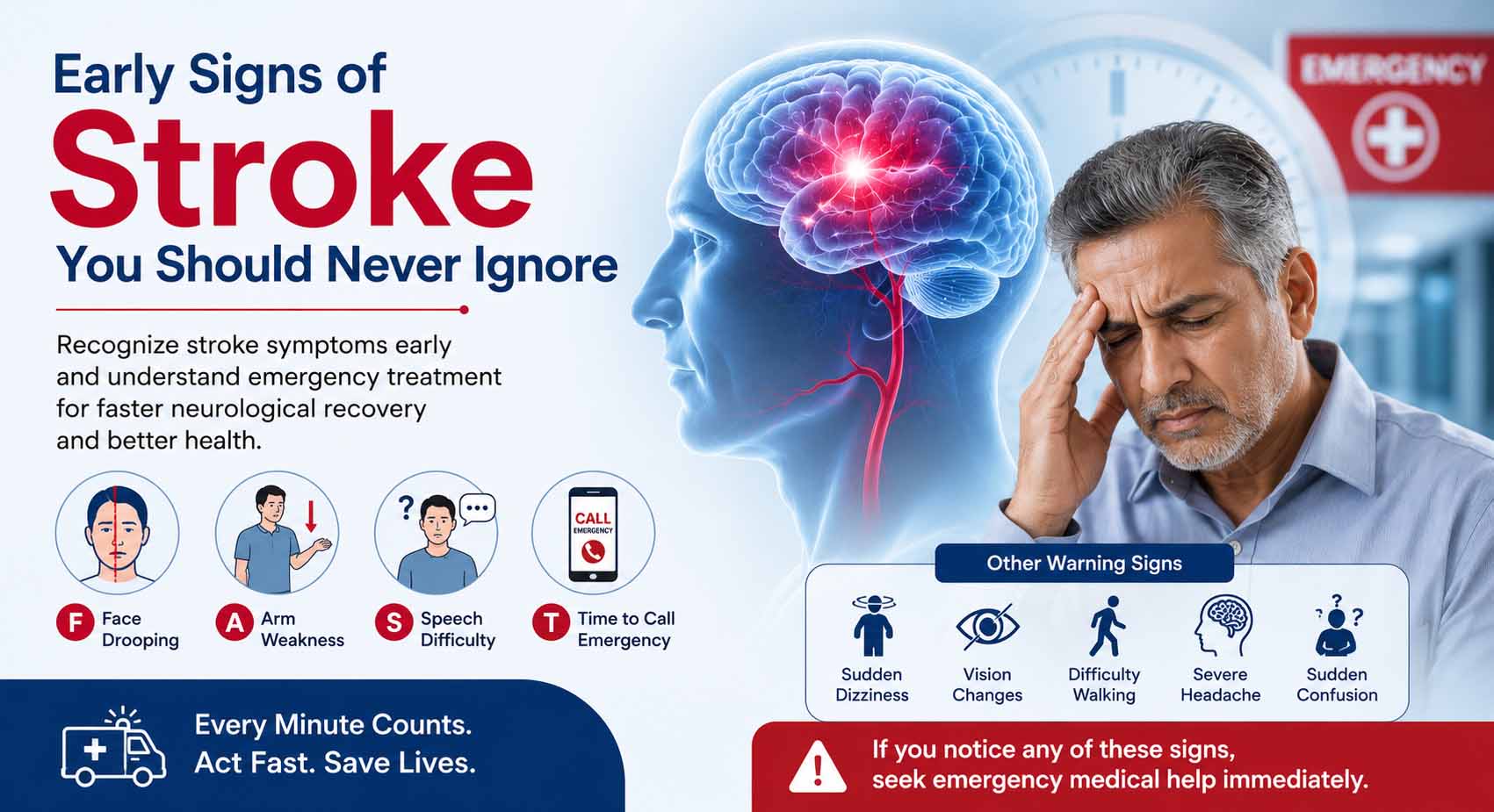
The easiest way to recognize a stroke is by remembering the F.A.S.T. warning signs.
One side of the face may droop or feel numb. Ask the person to smile and check if the smile appears uneven.
One arm may become weak or numb. Ask the person to raise both arms. If one arm drifts downward, it may indicate a stroke.
Speech may become slurred, confusing, or difficult to understand. The person may struggle to repeat a simple sentence.
If any of these symptoms appear, seek emergency medical care immediately. Every minute counts during a stroke.
Apart from the FAST symptoms, stroke may also present with:
Never ignore these symptoms, even if they disappear after a few minutes.
Certain factors increase the risk of stroke, including:
Managing these risk factors can significantly reduce the chances of having a stroke.
If you suspect someone is having a stroke:
Quick action can save brain cells and improve recovery.
A neurologist may recommend the following tests:
These investigations help determine the type and severity of the stroke.
Treatment depends on the type of stroke and how quickly the patient reaches the hospital.
Early treatment greatly improves the chances of recovery.
Recovery continues even after hospital discharge. Rehabilitation may include:
A personalized rehabilitation plan helps patients regain independence and improve their quality of life.
Simple lifestyle changes can reduce stroke risk:
Preventive care is the best defense against stroke.
Brain cells begin to die within minutes after a stroke starts. Delayed treatment can result in permanent disability, speech problems, memory loss, paralysis, or even death. Recognizing the warning signs and seeking immediate medical attention gives doctors the best chance to restore blood flow and minimize brain damage.
Dr. Neeta Garg is an experienced Neurophysician with expertise in diagnosing and managing stroke, paralysis, headache, epilepsy, Parkinson's disease, and other neurological disorders. She provides comprehensive neurological evaluation, personalized treatment plans, and compassionate care to help patients achieve the best possible recovery and long-term brain health.
Stroke is a medical emergency that requires immediate attention. Recognizing the early warning signs and acting quickly can save lives and reduce the risk of permanent disability. If you or someone around you experiences symptoms such as facial drooping, arm weakness, speech difficulty, or sudden vision changes, seek emergency medical care without delay.