Parkinson’s disease is a progressive neurological disorder that affects movement, balance, and coordination. It develops gradually and often begins with mild symptoms that may go unnoticed. As the condition progresses, it can interfere with daily activities such as walking, writing, speaking, and maintaining balance.
Although Parkinson’s disease cannot be cured, early diagnosis, proper medication, lifestyle modifications, and regular neurological care can help manage symptoms effectively and improve quality of life.
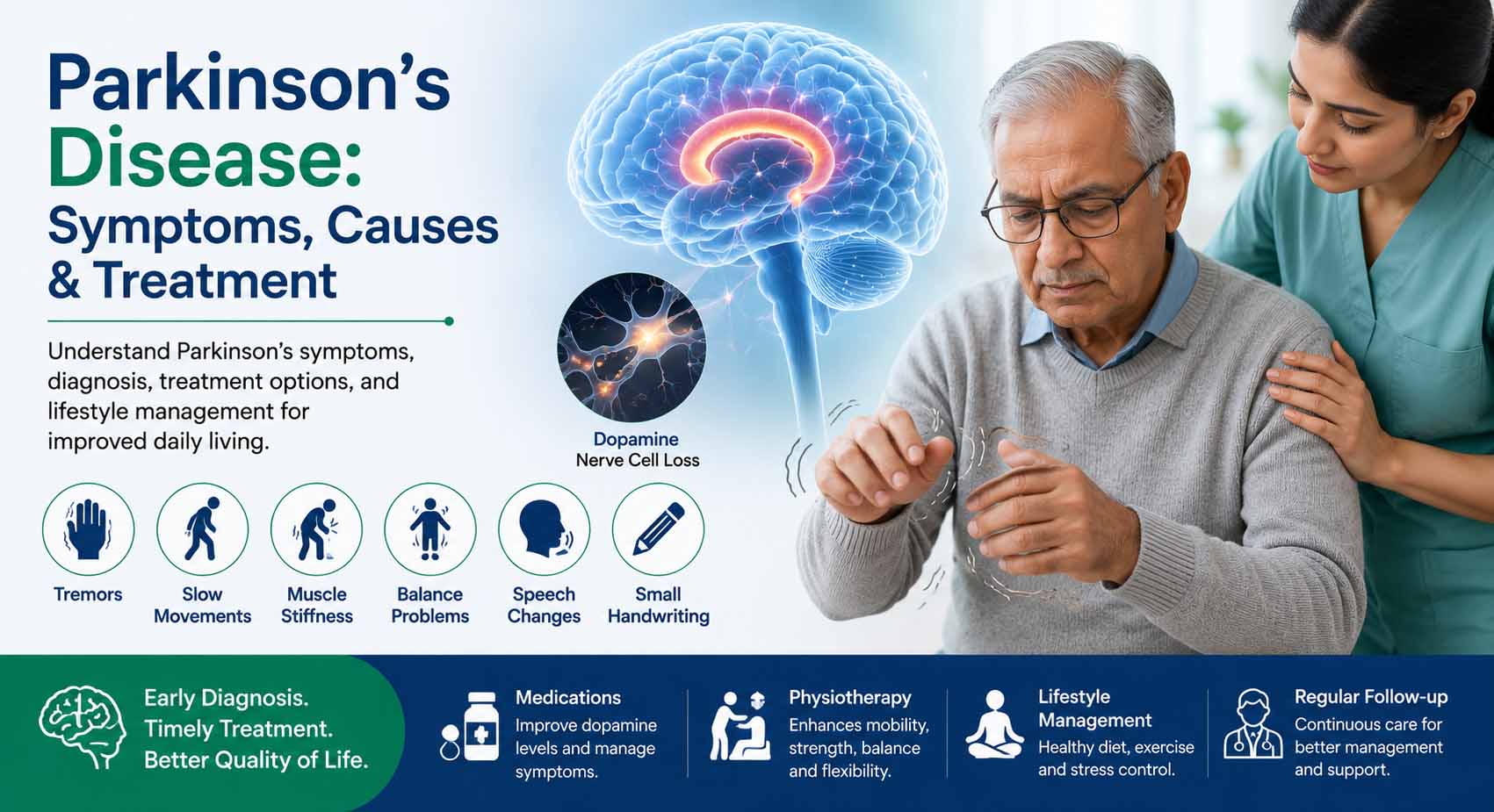
Parkinson’s disease is a disorder of the nervous system caused by the gradual loss of dopamine-producing nerve cells in the brain. Dopamine is a chemical messenger that helps control smooth and coordinated muscle movements.
As dopamine levels decrease, patients begin to experience tremors, stiffness, slow movements, and balance problems.
The exact cause of Parkinson’s disease is still unknown, but several factors may contribute to its development:
In many patients, Parkinson’s develops due to a combination of genetic and environmental factors.
The symptoms usually develop gradually and worsen over time.
Common early signs include:
Recognizing these symptoms early allows timely diagnosis and better disease management.
As Parkinson’s progresses, patients may experience:
Regular neurological follow-up is essential to manage these symptoms effectively.
Certain individuals have a higher risk of developing Parkinson’s disease.
These include:
However, Parkinson’s disease can also occur in younger adults.
Consult a neurologist if you notice:
Early consultation helps slow disease progression and improves long-term outcomes.
There is no single laboratory test for Parkinson’s disease.
Diagnosis usually includes:
An experienced neurologist carefully evaluates symptoms before confirming the diagnosis.
Although Parkinson’s disease has no permanent cure, treatment focuses on controlling symptoms and maintaining independence.
Medicines help improve dopamine activity and control movement-related symptoms.
Treatment may include:
Medication plans are individualized based on each patient's condition.
Healthy lifestyle habits play a vital role in managing Parkinson’s disease.
Patients are encouraged to:
These measures help maintain mobility and improve overall quality of life.
Comprehensive rehabilitation may include:
A multidisciplinary approach helps patients remain active and independent.
There is currently no proven way to prevent Parkinson’s disease. However, maintaining a healthy lifestyle, regular exercise, a balanced diet, and avoiding unnecessary exposure to toxins may contribute to better brain health.
Many people with Parkinson’s continue to lead active and fulfilling lives with proper treatment and support.
Important tips include:
With proper care, symptoms can be effectively managed for many years.
Dr. Neeta Garg is an experienced Neurophysician with expertise in diagnosing and treating Parkinson’s disease, stroke, epilepsy, headaches, paralysis, and various neurological disorders. She provides personalized treatment plans, evidence-based neurological care, and compassionate support to help patients maintain independence and improve their quality of life.
Parkinson’s disease is a progressive neurological disorder, but early diagnosis and appropriate treatment can significantly improve a patient’s quality of life. Recognizing the early symptoms, consulting a neurologist promptly, and following a personalized treatment plan can help manage the condition effectively and maintain independence for years.